
How do I calculate my macros for weight loss?
No spreadsheet. No guessing at percentages. Six answers, and you get grams you can actually put on a plate.
General education, not a personal plan.
Set protein first, then fat, and let carbs take what is left. A woman losing fat usually lands near 1.4 to 1.9 grams of protein per kilogram of body weight, with fat around 20 to 35 percent of calories. The calculator below turns that into real grams, and grams per meal.
What are my macros?
Six questions. It gives you a calorie estimate, grams of protein, carbs, and fat, and what each plate looks like.
A starting point for losing fat, not a prescription.
Show me the math
Every step below is fixed arithmetic. Nothing is hidden, and nothing adapts to you beyond the six answers you gave.
Step 1. Resting energy, from Mifflin-St Jeor
This calculator is written for women, so it uses the female form of the equation the Academy of Nutrition and Dietetics Evidence Analysis Library recommends when indirect calorimetry is not available, using actual body weight:
RMR = (10 × weight in kg) + (6.25 × height in cm) − (5 × age in years) − 161
Step 2. The activity multiplier
| Your week | Multiplier |
|---|---|
| Sedentary | 1.2 |
| Lightly active | 1.375 |
| Moderately active | 1.55 |
| Very active | 1.725 |
Be honest about this one. These four numbers are the conventional activity factors paired with Mifflin-St Jeor. They are a convention, not a measurement from a single study, and they are the largest source of error in any calculator like this one. That is why the output is a starting point you adjust from, not a target you obey.
Step 3. The goal adjustment
- Lose fat: multiply by 0.80, about a twenty percent reduction.
- Maintain: no change.
- Build muscle: multiply by 1.10.
The result is rounded to the nearest ten. The calculator never displays a target below 1,200 calories a day. If your inputs land lower than that, it shows 1,200 and tells you to talk to a coach or a clinician, because a number that low is not something to set for yourself off a web page.
Step 4. Protein is set first
Protein does not come out of a percentage. It gets a real number first, and carbs and fat live on what is left.
The starting figure comes from how you train, in grams per kilogram of a reference body weight:
| Your week | Grams per kg | Where it comes from |
|---|---|---|
| Sedentary | 1.0 | A conservative step down from the exercising band. Not from a position stand. |
| Lightly active | 1.2 | A conservative step down from the exercising band. Not from a position stand. |
| Moderately active | 1.5 | Inside the 1.4 to 2.0 g/kg band in the ISSN 2017 protein position stand. |
| Very active | 1.7 | Inside the same ISSN band. |
- Lose fat adds 0.2 g/kg, because in a deficit the job is holding the muscle you already have.
- Build muscle raises the figure to at least 1.6 g/kg if it is not already there.
- The figure is never taken above 2.0 g/kg, the top of the ISSN band.
Reference weight. Protein need tracks lean mass more closely than total body weight, and lean mass does not rise in a straight line with body fat. So above 200 lb (90.7 kg) the calculator counts only half of the extra weight for protein, and it never calculates protein on more than 250 lb (113.4 kg). Calories still use your actual weight, which is what the Academy recommendation says to do.
Step 5. Fat next
Fat starts at 0.35 grams per pound of that same reference weight, then gets held inside 20 to 35 percent of your calories, which is the Acceptable Macronutrient Distribution Range for fat in the Dietary Reference Intakes.
Step 6. Carbs are the remainder
Whatever calories are left after protein and fat become carbohydrate, at 4 calories a gram.
On a fat loss target, carbohydrate often lands below 45 percent of calories, which is the bottom of the Dietary Reference Intakes range for carbohydrate. That is expected when protein is set first, and it is worth knowing rather than hiding.
Step 7. Rounding and plates
Grams are rounded to the nearest five, and the per-meal figures are the daily grams divided by your meals a day, also rounded to the nearest five. Rounding means the macros can add up to a few calories either side of the headline number. Percentages are each rounded on their own, so they may total 99 or 101.
Sources
- Academy of Nutrition and Dietetics Evidence Analysis Library. Adult Weight Management: Determination of Resting Metabolic Rate. Recommends the Mifflin-St Jeor equation using actual weight, and states the female form as 10 × weight (kg) + 6.25 × height (cm) − 5 × age (years) − 161. Checked September 15, 2026.
- Jäger R, et al. International Society of Sports Nutrition Position Stand: protein and exercise. Journal of the International Society of Sports Nutrition, 2017. States that 1.4 to 2.0 g of protein per kg of body weight a day is sufficient for building and maintaining muscle mass in most exercising individuals, and gives a per-meal dose of about 0.25 g per kg or 20 to 40 g. Checked September 15, 2026.
- Institute of Medicine, Food and Nutrition Board. Dietary Reference Intakes: Acceptable Macronutrient Distribution Ranges. National Academies. Fat 20 to 35 percent of energy, carbohydrate 45 to 65 percent, protein 10 to 35 percent for adults. Checked September 15, 2026.
Please read this part. This is general education, not a personal plan, and not medical advice. It is not a substitute for custom macros built for you inside coaching.
Talk to a clinician before changing how you eat if you are pregnant or breastfeeding, are managing kidney disease, or have been told to limit protein. Their numbers replace these.
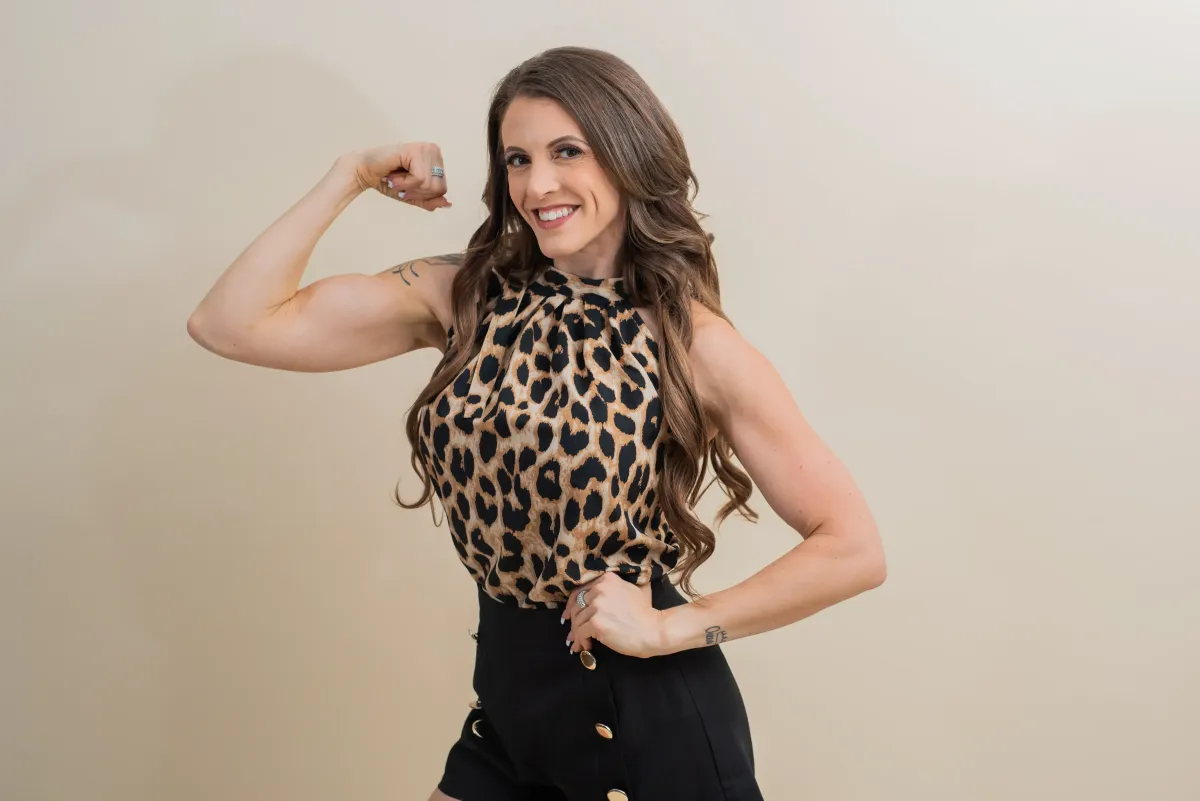
Built by Julie Salter, NASM certified personal trainer and nutrition coach. Sources checked September 15, 2026.
Please read this part. This is general education, not a personal plan, and not a substitute for custom macros built for you inside coaching. Talk to a clinician before changing how you eat if you are pregnant or breastfeeding, are managing kidney disease, or have been told to limit protein. Their numbers replace these.
What if the calculator does not load?
Here are three worked examples from the same math. Start with the one closest to you.
| Profile | Calories | Protein | Carbs | Fat |
|---|---|---|---|---|
| 150 lb, 5 ft 4 in, 45, lightly active, losing fat | 1,440 | 95 g | 140 g | 55 g |
| 180 lb, 5 ft 6 in, 52, moderately active, maintaining | 2,240 | 120 g | 295 g | 65 g |
| 135 lb, 5 ft 2 in, 38, very active, building muscle | 2,360 | 105 g | 360 g | 55 g |
Grams are rounded to the nearest five, so they can total a few calories either side of the headline number. Change one answer and every row moves, which is the point.
Why does protein get set first?
Because it is the one macro with a job that nothing else can do. In a deficit, protein is what keeps the weight you lose from coming off your muscle.
The ISSN 2017 position stand on protein and exercise puts 1.4 to 2.0 grams per kilogram of body weight a day as sufficient for building and maintaining muscle in most exercising people. The calculator sets your protein inside that band, then nudges it up if you are losing fat.
"Protein is the material. Lifting is the signal."
Fat comes second, held between 20 and 35 percent of your calories, which is the Acceptable Macronutrient Distribution Range for adults. Carbs get whatever is left, and on a fat loss target that often means carbs land below the usual percentage advice. That is expected when protein leads.
Want just the protein number on its own? Use the protein calculator.
Do I have to track this forever?
No. Tracking is a teaching tool, not a life sentence.
Most women need a few weeks of measuring to learn what 30 grams of protein looks like on a plate. After that, the plate does the work and the app becomes optional.
"Food you can actually eat, on a Tuesday, in your real life."
If the numbers here look low next to what you have been eating, read the signs you are not eating enough before you cut anything.
"With previous diets I felt like I was going without things I wanted, but with Julie's help I can literally have whatever I want. I feel so free and have developed a better relationship with food thanks to her."Amanda, via Trustpilot
What else do I need to know?
How do I calculate my macros for weight loss?
Estimate your daily calories, take about twenty percent off, set protein first, set fat between 20 and 35 percent of calories, then let carbohydrate fill the rest. The calculator above runs exactly that sequence and shows every step under "Show me the math."
How much protein, carbs, and fat should a woman eat?
It moves with your weight, your training, and your goal. As a shape: protein between 1.0 and 2.0 grams per kilogram of body weight, fat between 20 and 35 percent of calories, and carbohydrate as the remainder.
What if I go over on carbs?
Nothing happens. One day over on carbs does not undo a week, and no food is off the list. Look at the seven day average instead of the single day, and check whether protein still landed, because that is the number worth protecting.
Are macro calculators accurate?
They are estimates. The activity multiplier is the weakest link in every calculator like this one. Use the output for two to three weeks, watch what actually happens, and adjust from there.
Should my macros change on rest days?
For most women, no. The same targets every day are simpler to run and easier to stick with. Cycling carbs around training is a refinement for later, not a starting point.
Where should I go next?
So how do I turn these numbers into a plan?
A calculator gives you a starting point. A coach adjusts it when your real week gets in the way, and picks the pieces you actually need.
You pick the pieces. The price moves with you.
Sources
- Academy of Nutrition and Dietetics Evidence Analysis Library. Adult Weight Management: Determination of Resting Metabolic Rate. Checked September 15, 2026. Recommends the Mifflin-St Jeor equation using actual weight when indirect calorimetry is not available, and states the female form used by this calculator.
- Jäger R, et al. International Society of Sports Nutrition Position Stand: protein and exercise. Journal of the International Society of Sports Nutrition, 2017. Checked September 15, 2026. Supports 1.4 to 2.0 g of protein per kg of body weight a day for building and maintaining muscle mass in exercising individuals, and 20 to 40 g per meal.
- Institute of Medicine, Food and Nutrition Board. Dietary Reference Intakes: Acceptable Macronutrient Distribution Ranges. National Academies. Checked September 15, 2026. Supports fat at 20 to 35 percent of energy, carbohydrate at 45 to 65 percent, and protein at 10 to 35 percent for adults.
This page is general education, not medical advice, and not a personal plan. Coaching supports nutrition habits, strength training, planning, and accountability. It does not diagnose, prescribe, interpret your labs, or replace medical care. Talk to a clinician before changing how you eat if you are pregnant or breastfeeding, are managing kidney disease, or have been told to limit protein.
Julie Salter Fitness
Do less. Eat more. Lose the weight. Helping busy women lose inches, eat the foods they love, and build results that actually last.